Béla Balázs Studio was a rare space for radical filmmaking in socialist Hungary. This selection brings together documentary, conceptual art and formal experiments.
Founded in Budapest in 1959, the Béla Balázs Studio became one of the most unusual institutions in Hungarian cinema. State-funded but largely self-governed, and without the same obligation to bring its films into regular distribution, BBS offered young filmmakers a space to test ideas outside the conventions of the mainstream film industry.
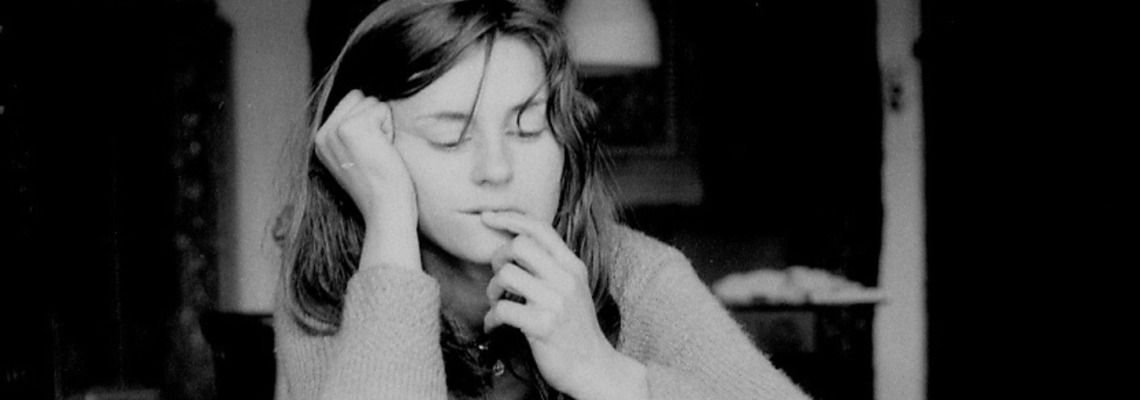
The ten films in this selection span almost three decades of that activity, from Sándor Sára’s Gypsies (1962) to Dóra Maurer’s Inter-Images (1990). They also show just how different the work produced under the BBS umbrella could be. Sára’s Gypsies, one of the first Hungarian films to address the living conditions of the country’s Roma population directly, examines poverty, education, healthcare and exclusion. Judit Elek’s How Long Does Man Live? (1967) connects two opposite moments in working life: an ageing lathe operator leaving the factory after forty years and a boy arriving in Budapest to begin an industrial apprenticeship. Judit Ember’s Instructive Story (1976), meanwhile, returns with its protagonists to a decisive period of their adolescence, allowing them to confront their past and their responsibility towards one another.
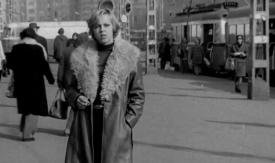
Elsewhere, filmmakers used the Studio to question the basic mechanisms of cinema itself. Zoltán Huszárik’s Elegy (1966) replaces linear storytelling with a dense montage of images and associations, turning the disappearing relationship between humans and horses into a reflection on modernisation and death. In János Tóth’s Motion Picture (1976), optical refractions and transformations make the projected image—and the machinery of seeing it—the film’s subject. Tibor Hajas takes another route in Self-Fashion Show (1976): passers-by in Budapest are asked to pose for the camera as “models of their own fates”, while voices on the soundtrack instruct and assess them, turning a simple documentary setup into an experiment in self-presentation, observation and control.
Few works expose the possibilities and limits of the BBS experiment as sharply as Tamás Szentjóby’s Centaur (1975). Images of agricultural workers, engineers and factory labourers are paired with dubbed philosophical and deliberately incongruous conversations, unsettling the familiar visual language of socialist labour. The film was stopped before completion, Szentjóby was arrested for his opposition activities and later expelled from Hungary, while the sole working print was sealed away until it was rediscovered in 1983.
The selection also includes three works by Dóra Maurer, whose films bring conceptual art into direct contact with the moving image. Learned Perfunctorily Movements (1973) subjects the same sequence of gestures to increasingly complex combinations of image and sound; Triolets (1981) builds variations from different lenses, viewpoints and sung tones; and Inter-Images (1990) uses masking, flicker, camera movement and frozen instants to interfere with straightforward perception. Across nearly twenty years, the films turn viewing itself into an active process: structures are established, repeated and disrupted, and the spectator has to continually adjust to what the image is doing.
Seen together, these films make BBS less a style or movement than a working environment in which cinema could be approached as social investigation, formal experiment, political provocation or simply a problem to be taken apart and rebuilt. The results remain strikingly heterogeneous, which may be the clearest indication of what the Studio made possible.
DAFilms.com is powered by Doc Alliance, a creative partnership of 7 key European documentary film festivals. Our aim is to advance the documentary genre, support its diversity and promote quality creative documentary films.